

The “Digital Friction” Crisis
We are currently witnessing a paradox in the corporate world. Organizations are investing record amounts in productivity tools, collaboration platforms, and AI assistants, yet employee burnout and “digital fatigue” are at all-time highs.
Why? Because for the last decade, we have prioritized technology adoption over human adaptation.
A study by Gartner recently highlighted that employees are suffering from “change fatigue,” with their willingness to support enterprise change collapsing to just 43%. When you force sophisticated digital tools onto a workforce without fostering a human-centric digital culture, you don’t get efficiency. You get friction, shadow IT, and a workforce that views innovation as a threat rather than an enabler.
For C-suite leaders, the message is clear: The next competitive frontier isn’t about who has the fastest cloud; it’s about whose people can best leverage that cloud to create value.
1. Shift from “User Adoption” to “User Empowerment”
Traditional IT implementation focuses on “adoption rates”, literally, how many people logged in. A human-centric approach focuses on “empowerment”: how many people achieved a better outcome with less effort.
Too often, digital transformation feels like something done to employees rather than with them.
- The Pain Point: Employees are bombarded with disparate tools that don’t talk to each other, increasing cognitive load and switching costs.
- The Strategic Fix: Involve end-users in the procurement and design phase, not just the training phase. Adopt a Design Thinking approach to internal tooling. Ask: Does this tool remove a barrier, or does it merely digitize an existing bad process?
2. Rebranding AI: From “Replacement” to “Augmentation”
The elephant in the room regarding digital culture today is Artificial Intelligence. If you do not explicitly address the fear of obsolescence, your employees will subconsciously resist AI integration.
A human-centric culture reframes the narrative. It positions technology as an exoskeleton, a tool that handles the drudgery so humans can handle the strategy, rather than as a rival.
- The “Iron Man” Model: Teach your teams that AI is there to handle the data entry, the scheduling, and the pattern recognition. This frees them to focus on what machines cannot do: empathy, complex problem-solving, and creative strategy.
- Actionable Step: Meaningful KPIs should shift from “volume of output” (which AI wins) to “value of insight” (where humans win).
3. Psychological Safety: The Engine of Agility
Innovation requires failure. If your digital culture penalizes mistakes, your team will never push the boundaries of your new technology stack. They will use the new tools in the safest and most cautious ways possible to avoid breaking anything.
Google’s Project Aristotle famously found that psychological safety was the number one predictor of high-performing teams. In a digital context, this means:
- Sandboxes over Silos: Provide “sandbox” environments where teams can experiment with new data sets or code without fear of crashing production systems.
- Blameless Post-Mortems: When a digital initiative fails, the question shouldn’t be “Who messed up?” but “What in our process allowed this to happen?”
4. The “Continuous Learning” Contract
In the past, you hired someone for a specific skill set, and they utilized it for a decade. Today, the half-life of a learned technical skill is about 2.5 years.
A human-centric digital culture views the workforce as an appreciating asset that requires maintenance (training), not a depreciating asset to be replaced.
- The Strategy: Move from sporadic “training days” to embedded micro-learning.
- The Benefit: It is significantly more cost-effective to upskill a loyal employee with deep institutional knowledge than to constantly hire expensive external tech talent who lack context about your business.
The Interdym Perspective: Harmonizing People, Process, and Technology
At Interdym, we often see clients who have purchased the “Ferrari” of tech stacks but are asking their teams to push it uphill. We believe that culture is the operating system of your enterprise. If the OS is buggy, the apps won’t run.
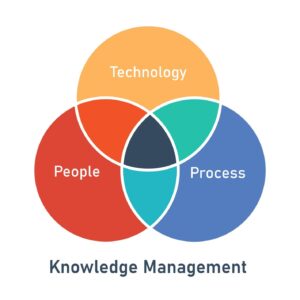
We help you build a human-centric foundation by:
- Conducting Cultural Readiness Assessments: We identify where the “antibodies” to change are located within your organization before deployment begins.
- Designing Employee Experience (EX) Journeys: We map the employee’s day-to-day interaction with technology just as rigorously as you map your customer’s journey.
- Leadership Coaching: We train technical leaders to manage human dynamics, ensuring they can communicate the “why” behind the “what.”
Technology is only as powerful as the people using it. When you put people first, the technology finally delivers on its promise.
Conclusion
We are moving into an era where the differentiator is no longer the technology itself: it is the digital fluency and resilience of your workforce. By building a culture that prioritizes user experience, psychological safety, and continuous growth, you turn your digital transformation from a source of stress into a source of strength.
Is your culture ready for your code? Contact Interdym today to schedule a Cultural Readiness Assessment and ensure your people are moving as fast as your technology.